Type:
Site development with sports facilities, stadium square, commercial areas and sports park
Year:
2022-2027 (2026)
Location:
Bærum Municipality, Norway
Contact persons:
Robin Rakke, Fredrikke Thuestad
Client:
Bærum Kommune / Backe Eiendom / Backe Stor-Oslo
Collaborating partners:
Stefan Ekberg Arkitekter AS, Grindaker Landskapsarkitekter, Dr. Techn. Olav Olsen, et al.
– A place where generations come together — in everyday life and for public celebrations!
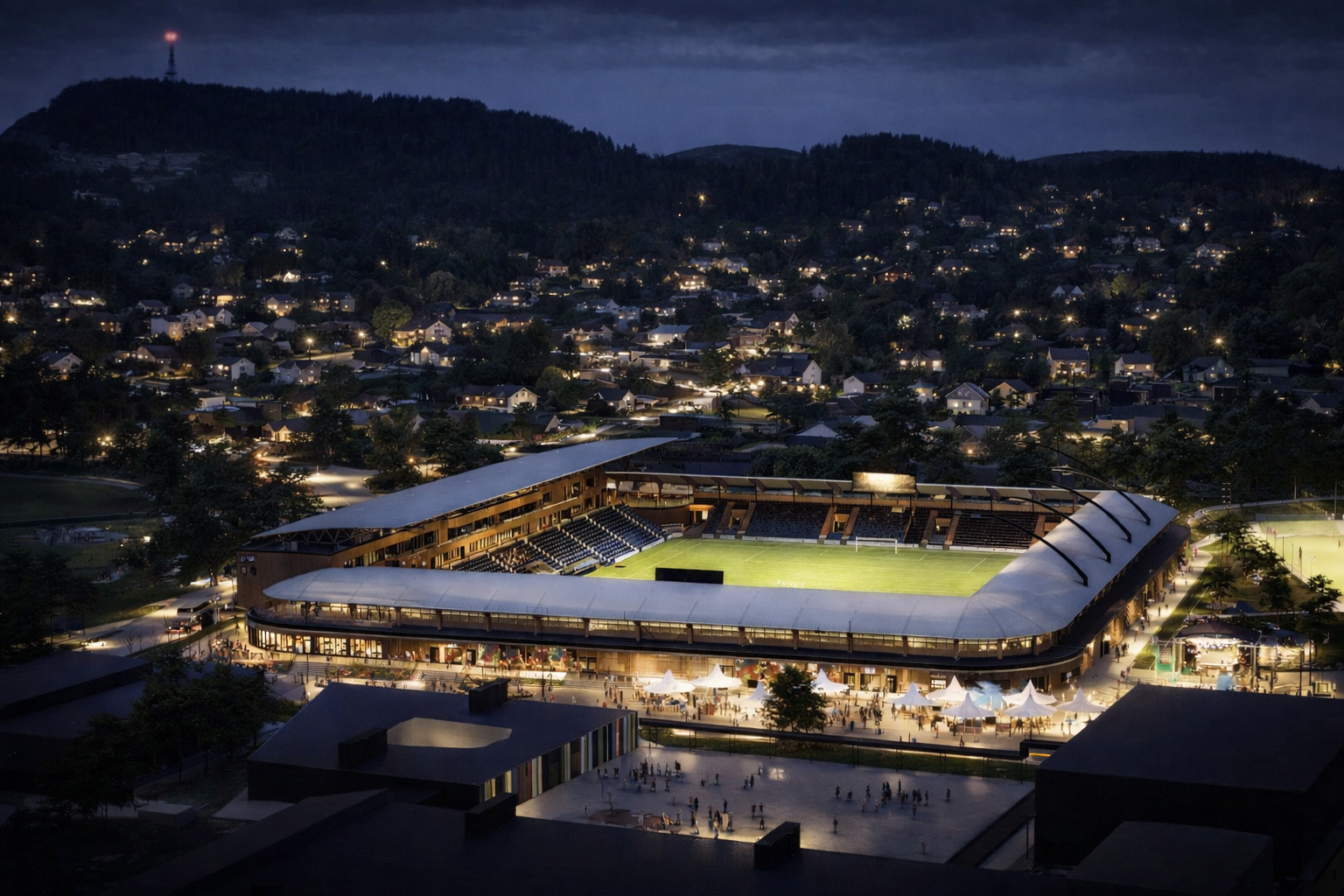
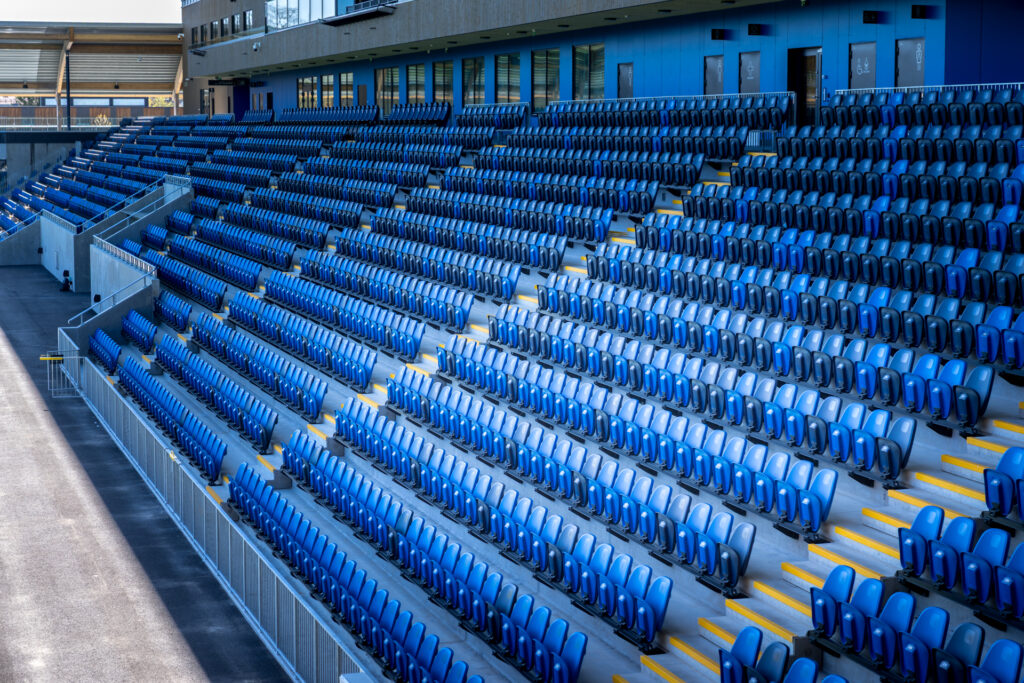
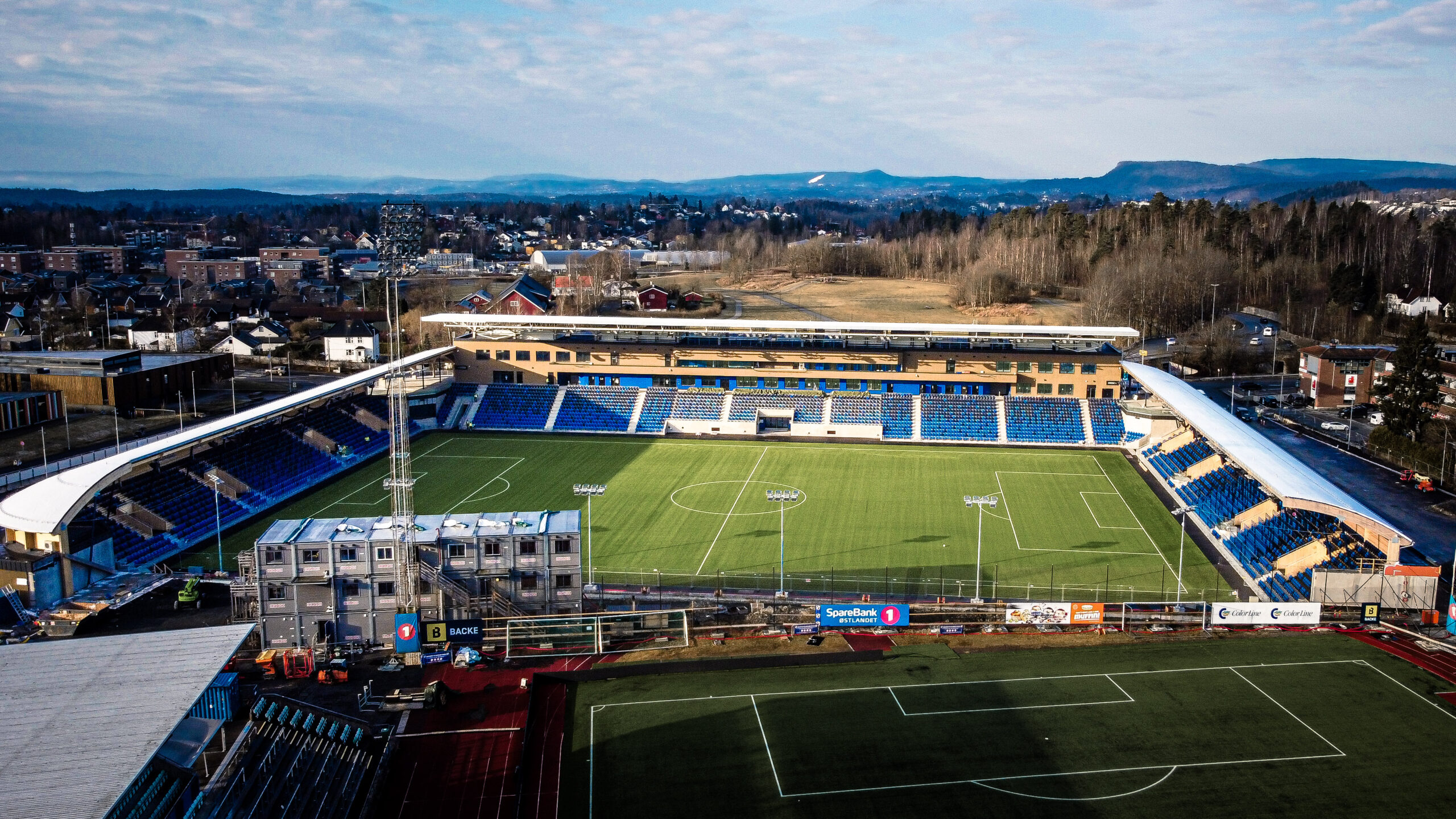
The stadium has a seating capacity of 8,001 — and just under 9,000 including standing sections for home and away supporters in domestic league matches. The stadium is developed in accordance with requirements from the Norwegian Football Federation (NFF) and UEFA Category 4, allowing it to host matches in European competitions.
The stadium and sports park will also include a variety of amenities designed to create activity and life at the venue — from morning to evening, all year round. The commercial part of the project, owned by Backe Eiendom, includes several rental spaces such as a grocery store, fitness center, café, and offices.
The new Nadderud Stadium and Sports Park opened in May 2026 and is scheduled to be fully completed in 2027.
A new gathering place for all of Bærum
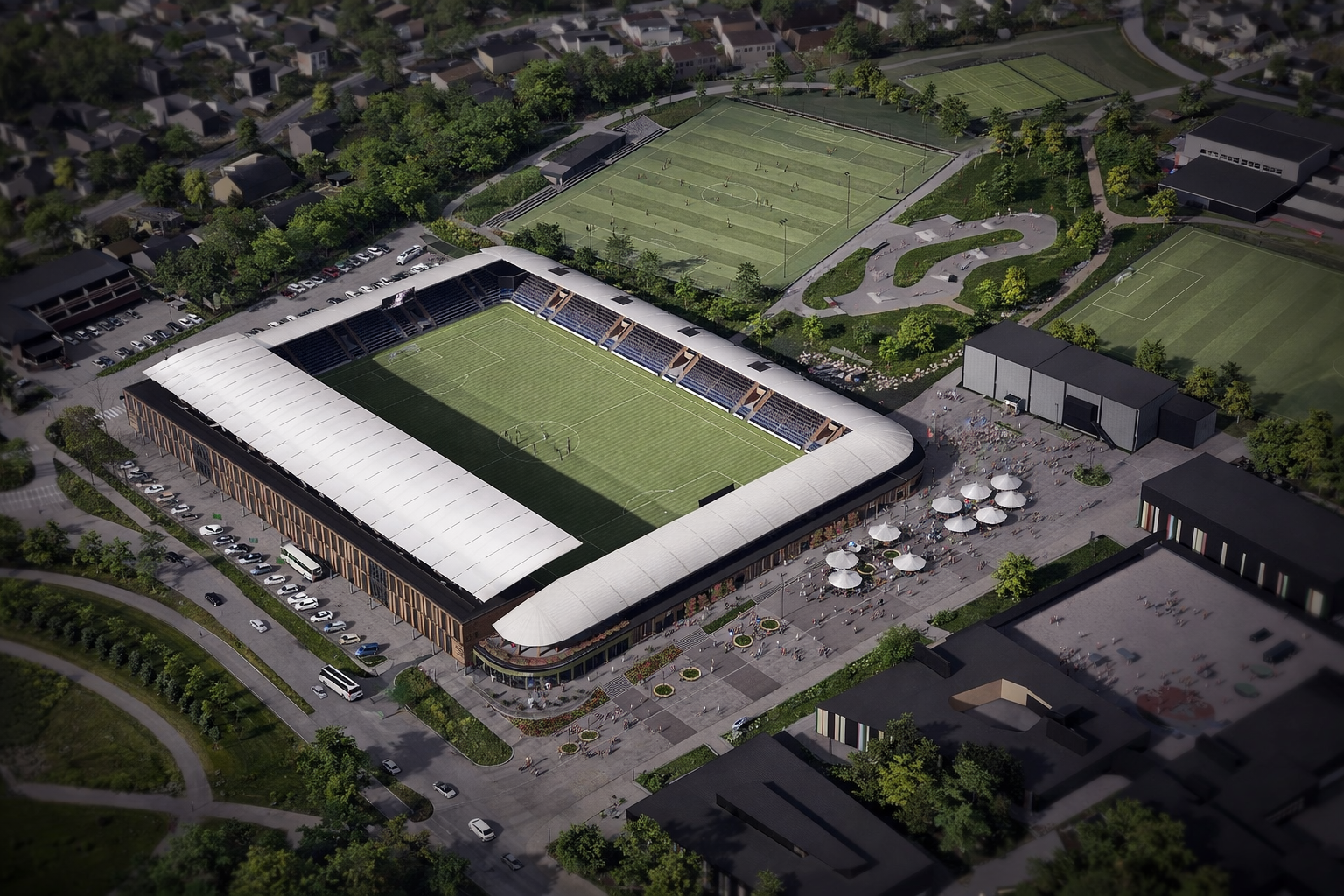
At Nadderud, a new and modern stadium with a sports park is being built — a vibrant hub for sports, activity, and community. The project includes both a new football arena and the revitalization of the surrounding sports park. The stadium is intended to be more than just a sports facility. It will become a social and sustainable meeting place for everyone, and a focal point for sports, recreation, and local engagement.
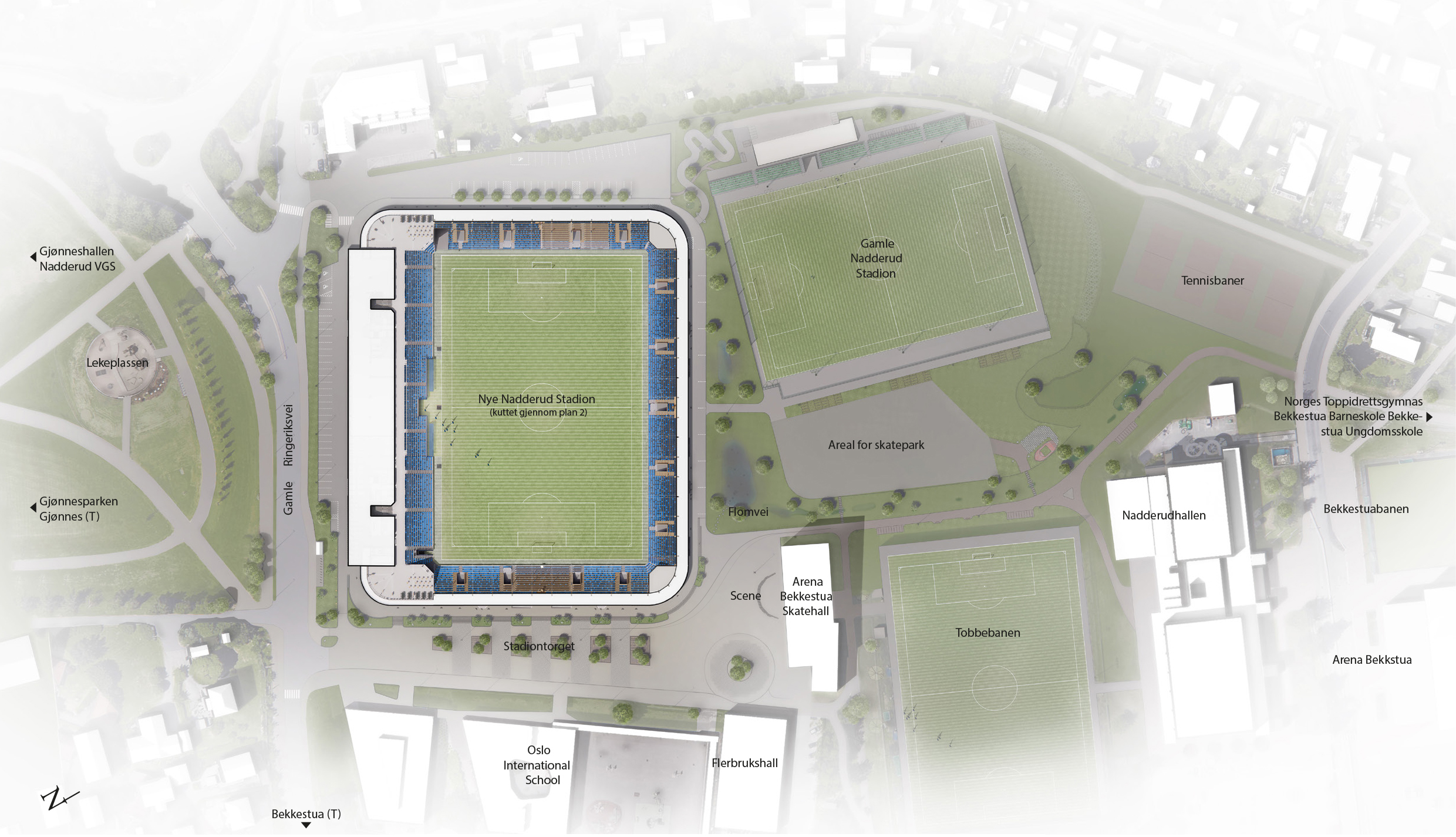
Between the stadium and Oslo International School, a large stadium square will be established — a natural meeting place on match days as well as in everyday life. The sports park will also feature a skate hall, two football training pitches, tennis courts, and park areas for play, activity, and recreation. Nearby are Nadderudhallen (swimming and multi-purpose hall), Nadderud Arena (handball), Gjønneshallen (indoor football hall), as well as several schools and kindergartens. Altogether, this will form a true hub for sports and activities in the municipality.
The project also includes the rerouting of the Nadderud stream, which currently runs in a culvert, as well as the establishment of a new flood channel through the park. Parts of the existing stadium will remain for grassroots and youth football. The old main stand will be demolished to make room for a new skate facility.
A boost for community and identity
Bærum Municipality has for many years had football teams at the top level in Norway, on both the women’s and men’s sides. These teams have regularly brought together (tens of) thousands of the municipality’s residents under the same roof. Few other institutions unite so many people in the same way as football — the world’s largest spectator sport. A new stadium is therefore not only about football, but also about identity, belonging, and local pride. A new and modern arena can thus help strengthen community and shared identity.
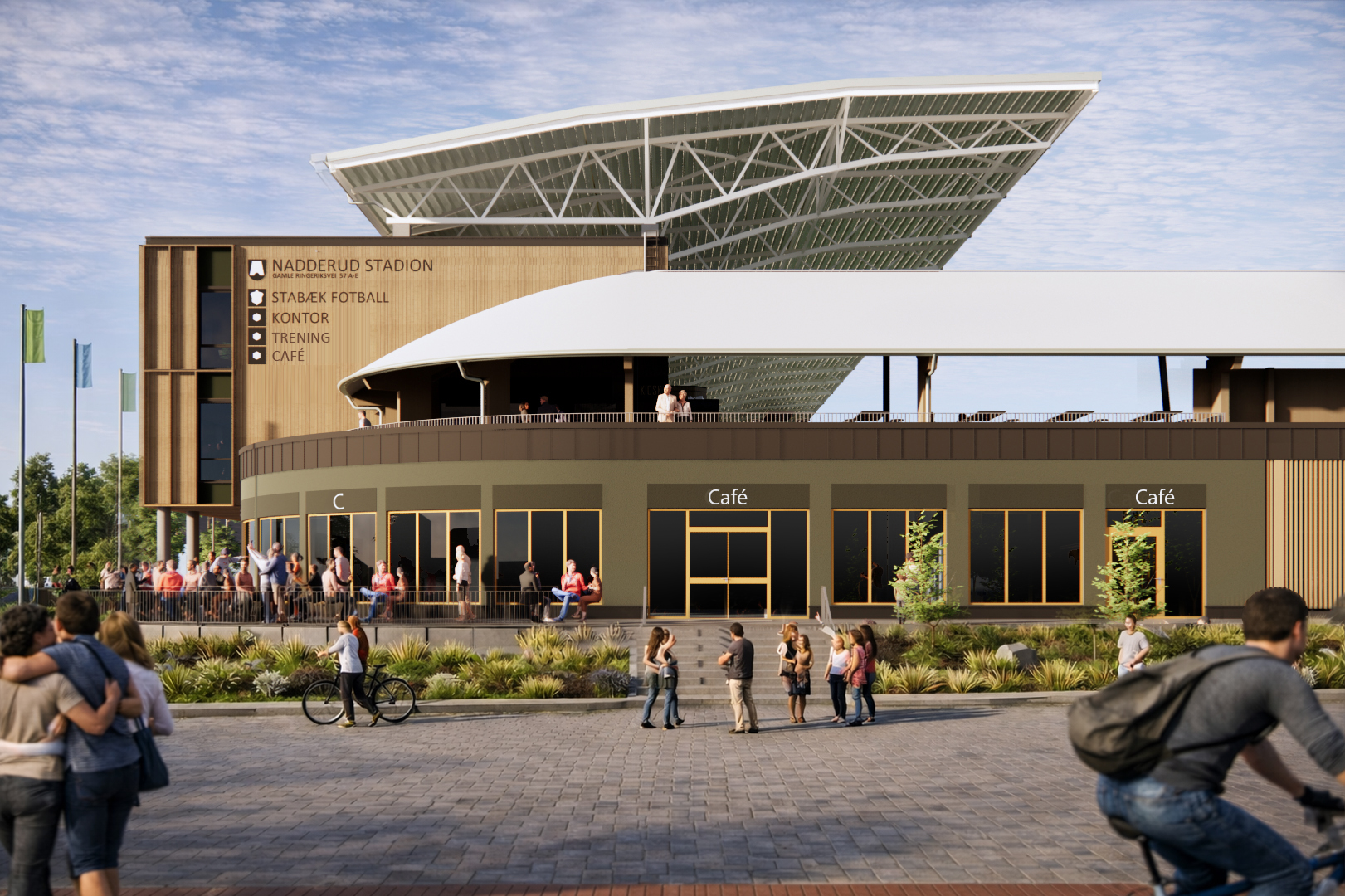
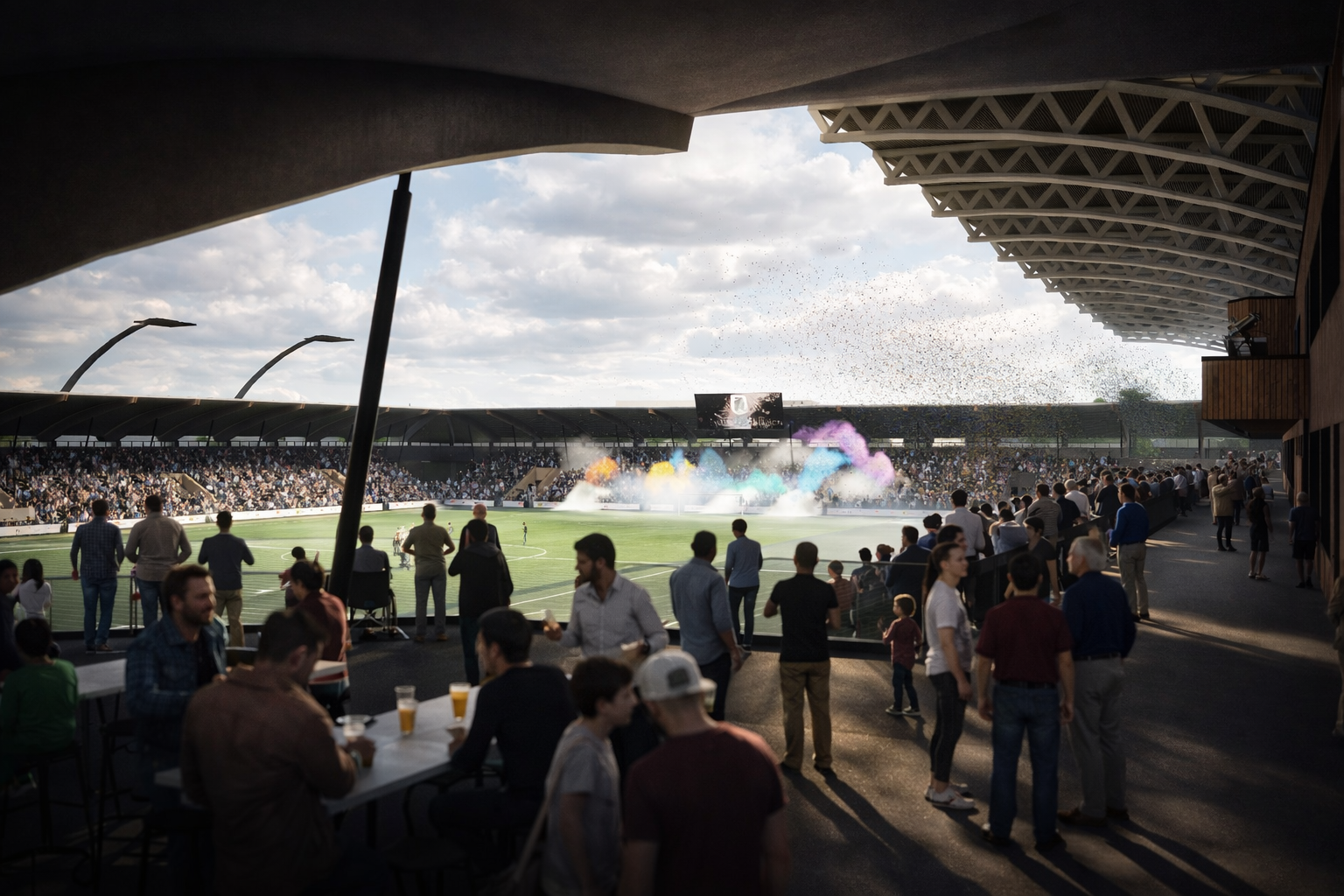
We have therefore aimed to create architecture with as many socially sustainable solutions and features as possible. For example, spectators will have access to highly attractive concourse areas on the second level, offering views both into the pitch and out toward the surroundings. Such features encourage people to arrive a bit earlier before events and perhaps stay a little longer after they have ended.
A modern and sustainable stadium
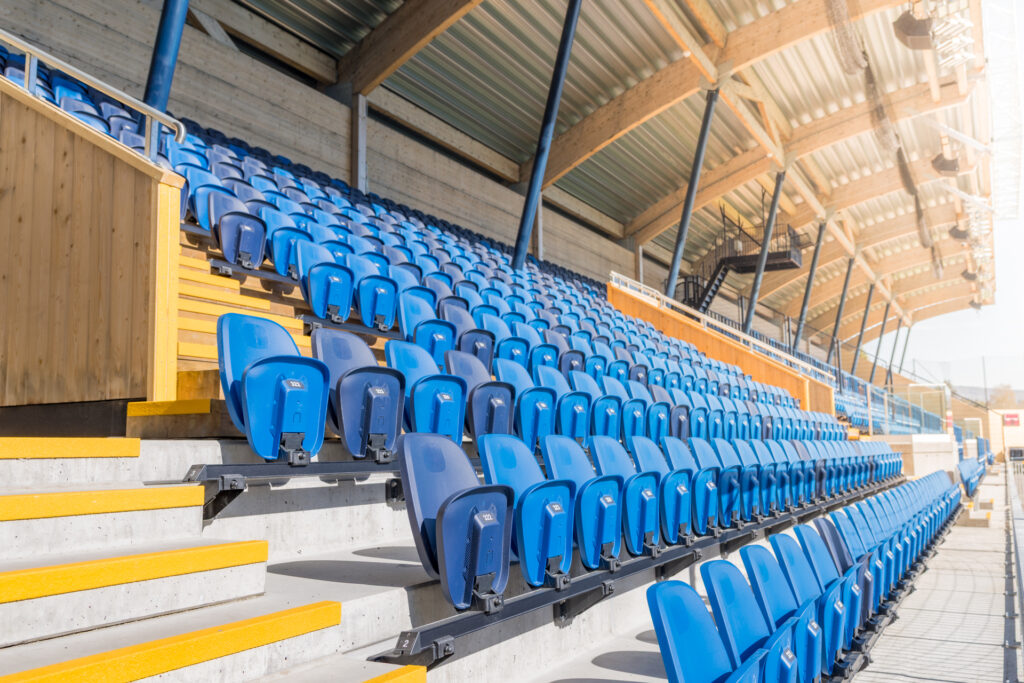
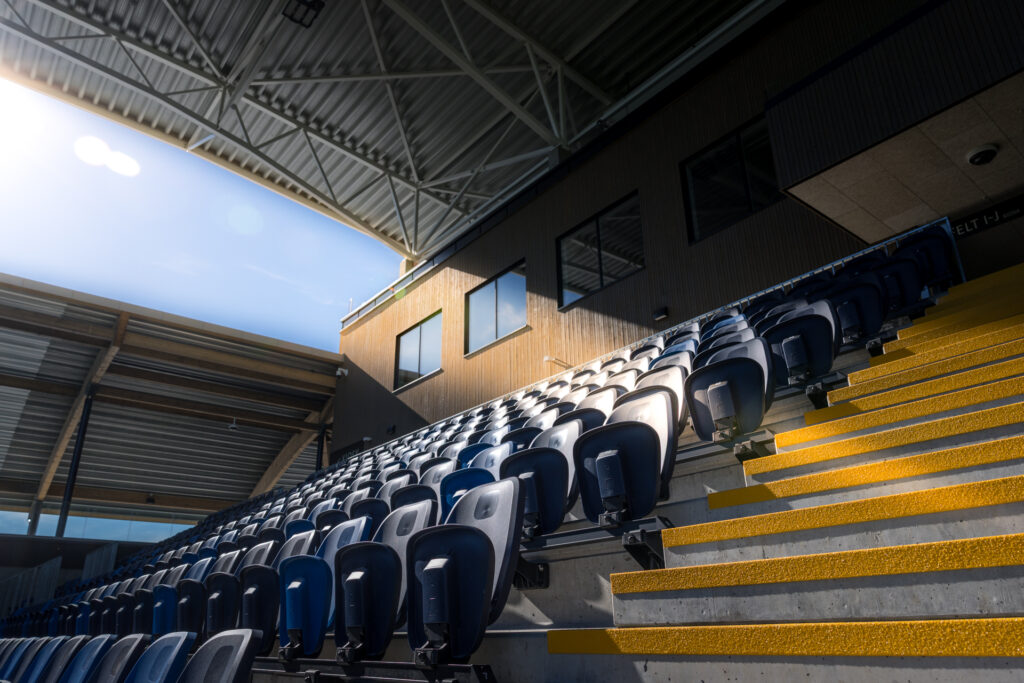
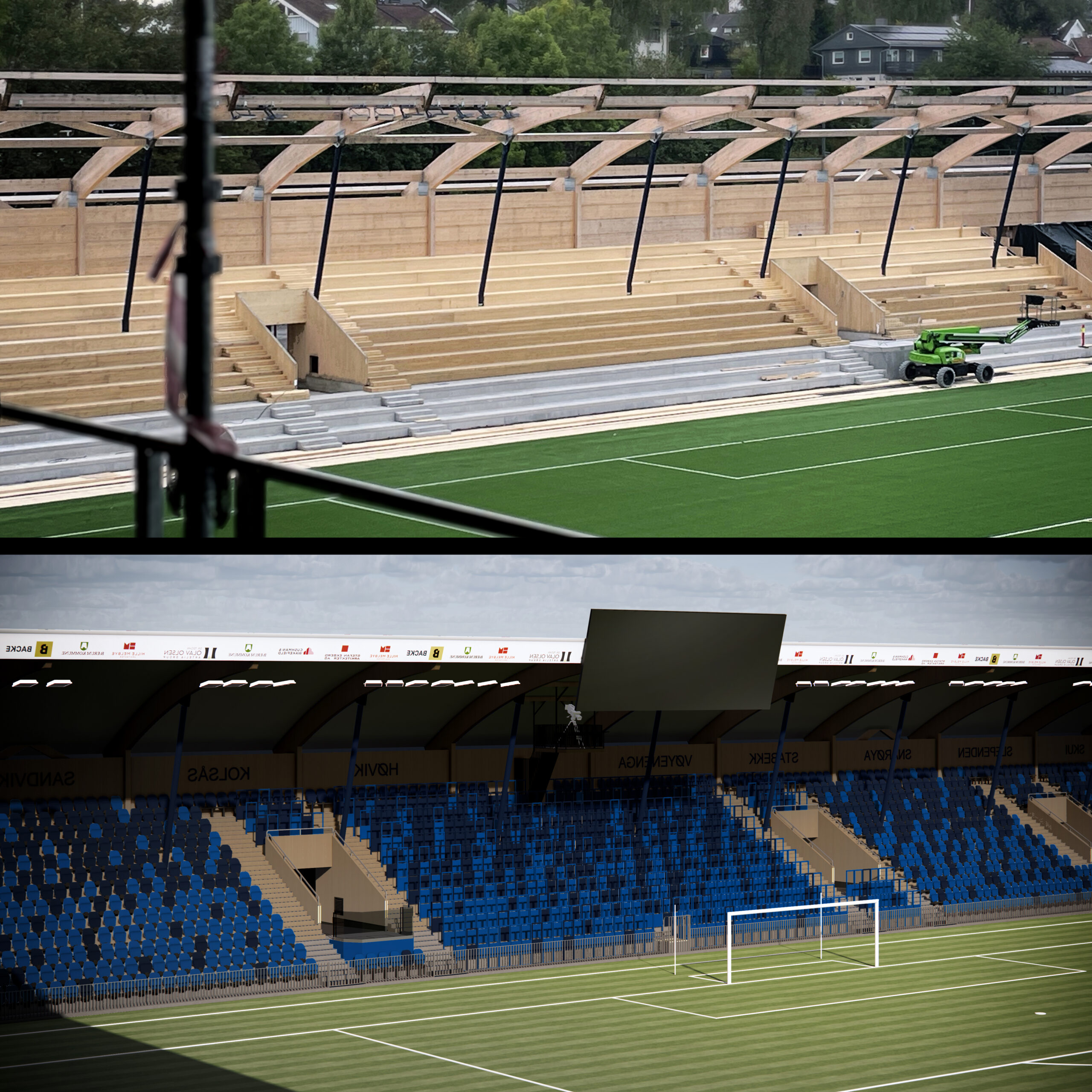
Three of the new stands surrounding the pitch are being built in timber, while the main stand and the commercial building are constructed in concrete and steel. The extensive use of wood gives the project aesthetic qualities, low greenhouse gas emissions, and a lighter structural weight on challenging ground conditions.
On the three lower stands, spectators enter directly from ground level onto row four, immediately providing a clear view of the entire arena. Accessible (wheelchair) seating is located near several of these entrances, ensuring excellent accessibility. Concession stands and restrooms are distributed beneath the stands. The concourse areas outside the stands are partly open toward the park, separated only by an open wooden slat wall and expanded metal panels with climbing plants. These plants on the façade create the impression that the surrounding green park is embracing the stadium.
Above the stands, a curved roof hovers over the stadium space, and its shape helps create an intimate setting that enhances the atmosphere during football matches.